 blog
Corporate Floral Arrangements for Office Spaces: 2026 Guide
Table of Contents
- Why Corporate Floral Arrangements Belong in Every Office
- Office Floral Design Ideas by Room
- Office Reception Flowers That Set the Tone
- Best Flowers for Offices: Matching Blooms to Light and Schedule
- Long-Lasting Flowers for Office Spaces
- Budgeting and Total Cost for Corporate Floral Arrangements
- Choosing a Floral Vendor and Handling Delivery
- Conclusion
- Frequently Asked Questions
Last Updated: October 19, 2026
Why Corporate Floral Arrangements Belong in Every Office
Corporate floral arrangements are professionally designed flower displays placed in workplaces to improve appearance, support employee morale, and create a welcoming impression on visitors. We see the difference fresh blooms make the moment a client walks through the door. A reception desk with a real arrangement signals that a business pays attention to detail.
The case for office flowers goes beyond decoration. Many businesses find that a well-kept lobby changes how customers and job candidates read the company. Employees notice, too. A rotating arrangement in a break area gives people something pleasant to look at during a long day.
Below, we'll show you exactly how to choose arrangements room by room, what lasts, and how to budget without waste. But first, here's what most guides get wrong: they treat office flowers as one-size-fits-all. They aren't. A lobby, a conference room, and a back-office desk each need different flowers, different sizes, and different care schedules.
Office Floral Design Ideas by Room
Office floral design ideas work best when they start with the space, not the flowers. Each room has its own traffic pattern, lighting, and purpose, and the arrangement should match all three.
Reception and Lobby
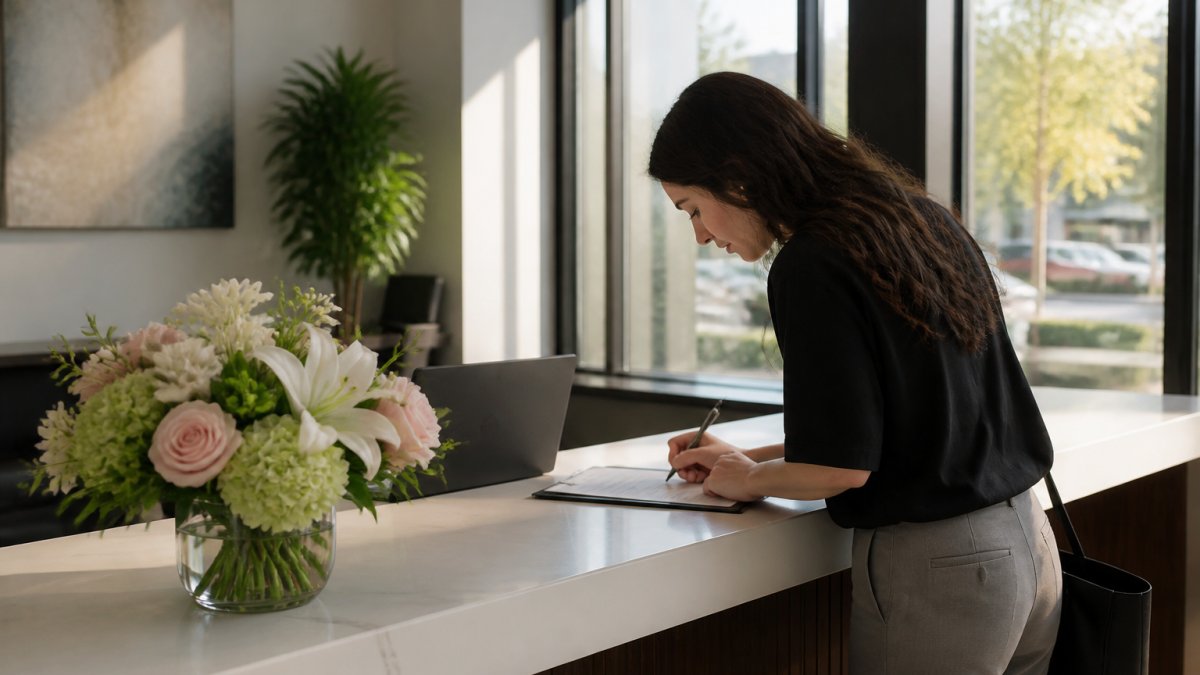
The lobby is your handshake in visual form. Keep arrangements low enough that reception staff can see over them, and place them where they won't block a walkway. A wide, low bowl of seasonal blooms reads as polished without shouting.
Desks, Conference Rooms, and Break Areas
Conference tables call for something compact and unscented, since strong fragrance distracts during meetings. Break areas can handle taller arrangements in a corner. Individual desks do well with small potted plants or a single stem in a slim vase.
Office Reception Flowers That Set the Tone
Office reception flowers should look intentional, not accidental. The arrangement is often the first thing a visitor photographs or mentions afterward, so it deserves more thought than a last-minute order.
Three placement rules we recommend:
- Keep the display below eye level so it frames the desk rather than hiding it
- Match the container to the room's finishes, glass for modern spaces, ceramic for warmer ones
- Refresh on a fixed schedule so the arrangement never looks tired
A common mistake is ordering one oversized bouquet for a large lobby. A single tall arrangement gets lost in a big space. Two smaller arrangements, one on the desk and one on a side table, fill the room better.
Best Flowers for Offices: Matching Blooms to Light and Schedule
The best flowers for offices are ones that tolerate indoor conditions and fit the maintenance your team can realistically provide. Light and schedule decide more than personal taste.
Low-light lobbies do well with orchids, peace lilies, and potted greenery. Bright, sunlit spaces can carry seasonal flowers like tulips and sunflowers. If nobody is around to water midweek, choose potted plants or succulents over cut stems.
Here's a simple match-up we use when advising offices:
| Office Condition | Best Options | Care Level |
|---|---|---|
| Low light, busy staff | Orchids, peace lilies, succulents | Low |
| Bright lobby, daily staff | Seasonal cut flowers | Medium |
| Conference rooms | Compact, unscented blooms | Low |
| Break areas | Tall greenery, mixed bouquets | Medium |
Long-Lasting Flowers for Office Spaces
Long-lasting flowers for office spaces reduce cost and hassle. The goal is an arrangement that still looks good on day ten, not just day one.
Chrysanthemums, carnations, alstroemeria, and orchids all hold up well indoors. Avoid delicate blooms in high-traffic areas where they'll be brushed against. Change the water every other day and trim stems at an angle to extend vase life; the cut flower care guidance from university extension services covers the basics in detail.
Budgeting and Total Cost for Corporate Floral Arrangements
Budgeting for corporate floral arrangements depends on quantity, arrangement size, delivery frequency, and season. Rather than quote a single number, it helps to understand the cost drivers so you can build a realistic annual figure and compare vendor quotes on equal terms.
Most offices fall into one of three spending patterns. A small office with one reception arrangement refreshed weekly typically pays for 52 deliveries a year plus the arrangements themselves. A mid-size office with a lobby, two conference rooms, and a break area may run three to five arrangements per delivery. A larger campus with multiple floors and a rotating schedule can reach dozens of arrangements per week. The per-arrangement price usually drops as volume rises, but delivery fees and replacement costs can offset that savings if the plan is not structured carefully.
Four cost drivers matter most:
- Arrangement size and stem count. A compact desk arrangement uses far fewer stems than a floor-standing lobby piece, and the price gap between them is often larger than offices expect. Ask vendors to quote by stem count or container size so you can compare like with like.
- Flower choice. Seasonal blooms and standard varieties cost less than imported or out-of-season stems. A plan that leans on what is in season locally will usually cost less per arrangement than one that specifies a particular flower year-round.
- Delivery frequency and fees. Weekly delivery costs more in total than biweekly, but the per-delivery fee may be the same. Confirm whether delivery is bundled into the subscription price or billed separately, and whether there is a minimum order for free delivery.
- Cut flowers versus potted plants. Potted plants and succulents have a higher upfront cost but last for months, while cut flowers need replacement every week or two. Over a year, a potted plant program can cost less per display than a cut-flower subscription, though it offers less visual variety.
Total cost of ownership also includes the labor your team spends managing the program. If someone has to place orders, receive deliveries, water arrangements, and chase replacements, that time has a cost. A recurring plan with a single point of contact usually reduces administrative overhead compared with one-off orders placed by different staff members.
A simple way to build a budget is to estimate the number of displays, multiply by the expected replacement frequency, add delivery fees, and then add a contingency for holiday price spikes and replacement of damaged or wilted arrangements. Request itemized quotes from two or three vendors using the same display count and frequency so the comparison is fair. A U.S. Small Business Administration guide to vendor contracts is worth reading before you sign a recurring floral agreement, since it explains what to confirm in writing, including renewal terms and cancellation notice.
Choosing a Floral Vendor and Handling Delivery
Choosing a floral vendor comes down to reliability, freshness, communication, and fit with your workplace constraints. A missed delivery before a client visit costs more than the flowers, so the evaluation should be structured rather than based on a single sample bouquet.
Use this checklist when comparing vendors:
- Service frequency and scheduling. Confirm which days and time windows are available, whether the schedule can change week to week, and how holiday weeks are handled. A vendor who delivers only on fixed days may not suit an office that hosts frequent client meetings.
- Customization. Ask whether arrangements can be adjusted for light levels, fragrance sensitivity, brand colors, and container preferences. Vendors who only offer preset bouquets may not be able to meet accessibility or allergy requirements.
- Reliability and replacement policy. Ask what happens if an arrangement arrives wilted or is damaged in transit. A written replacement or credit policy is more valuable than a verbal promise. Confirm the response time for replacement requests and whether the vendor delivers the replacement at no charge.
- Delivery coverage and access. Confirm whether the vendor delivers directly to your office or through a third party, whether they can deliver to a loading dock or reception desk, and whether they need a contact name and phone number for each delivery. Offices in secure buildings should confirm the vendor can handle sign-in and escort requirements.
- Communication and account management. A single point of contact who knows your preferences reduces errors. Ask how changes and special requests are handled and whether you receive delivery confirmations.
- Pricing transparency. Request an itemized quote that separates arrangement cost, delivery fees, and any subscription or account fees. Vendors who bundle everything into one price make it harder to compare and to adjust the plan later.
- Sustainability and waste. Ask about reusable containers, packaging, and whether the vendor composts or recycles spent flowers and greenery. This is increasingly part of procurement questionnaires and can affect your own waste reporting.
A practical next step is to request a sample arrangement and a written quote using the same specifications for each vendor. Compare the sample against the quote to confirm the size and stem count match what was promised. Then ask for two references from offices with similar delivery needs.
East End Flowers & Gifts designs custom arrangements and offers same-day delivery, so last-minute needs don't turn into a scramble. We also handle recurring office deliveries, which keeps your lobby fresh without anyone on your team placing orders. When you request a quote, tell us your display count, preferred frequency, and any fragrance or accessibility constraints so the plan fits your space from the start.
Conclusion
Keeping an office looking its best takes consistency, and flowers are one of the simplest ways to do it. The challenge is finding a florist who shows up on schedule and delivers arrangements that match what you ordered. East End Flowers & Gifts offers custom flower design, same-day delivery, and pre-made arrangements for offices that need a reliable partner. SHOP NOW and give your workspace a fresh look every week.
Frequently Asked Questions
What flowers are best for an office?
The best flowers for offices handle indoor light and a busy schedule. Orchids, peace lilies, and succulents hold up well in low light, while carnations, chrysanthemums, and alstroemeria last a week or more in cut arrangements. For reception areas, ask for seasonal flowers in company colors. If your team is on site only a few days a week, potted plants and succulents reduce the upkeep. A local florist can match the choice to your light levels and how often someone can change the water.
How often should office flowers be replaced?
Fresh cut arrangements usually look their best for five to seven days, so a weekly delivery keeps reception and conference rooms presentable. Potted plants and orchids can last months with basic care. Recurring delivery takes the reminder off your staff's plate. If you host clients often, add a midweek check for wilted stems and top off the water. In warmer months or near heating vents, expect a shorter vase life and plan the schedule around it.
Where should flowers be placed in an office?
Put the largest arrangement in the reception or lobby where visitors see it first, and keep it below eye level so it does not block sightlines. Place smaller arrangements on conference tables, in break areas, and near elevator banks. Avoid narrow hallways, server rooms, and desks of employees with fragrance sensitivities. Keep arrangements away from heat vents and direct sun. A room-by-room plan from your florist prevents clutter and keeps every display purposeful.
How do you choose floral arrangements for a corporate office?
Start with the space: reception, conference room, and desks each need a different size and style. Then set a budget and decide between one-time event flowers and a recurring subscription. Match colors to your brand and choose low-scent blooms if the office is shared. Confirm delivery windows, setup, and who refreshes the water. Ask for photos of past corporate work so you know what will actually arrive. A short trial delivery is the simplest way to test a vendor before committing.