 how-to
How to Preserve Fresh Cut Flowers at Home
Last Updated: November 4, 2026
Quick Summary
To keep fresh cut flowers looking good, start with a clean vase and freshly trimmed stems, then change the water every two days with flower food or a sugar and vinegar mix. Keep arrangements away from direct sun, heat, and ripening fruit, since these shorten vase life.
- Wash the vase with soap and hot water before every arrangement.
- Trim about an inch off each stem at a sharp angle, cutting under running water.
- Use a full packet of commercial flower food, stirred in before adding stems.
- Homemade mix: 1 teaspoon sugar and 1 teaspoon white vinegar per quart of water.
- Keep vases away from fruit bowls, since ripening fruit releases ethylene gas that fades flowers faster.
Table of Contents
- Start With Clean Stems and a Clean Vase
- What to Put in Water to Keep Flowers Fresh
- How to Keep Flowers Alive Longer in a Vase
- How to Keep Flowers Fresh Overnight Without a Fridge
- Frequently Asked Questions
Fresh cut flowers can look great for a week or more when you treat them right, but most bouquets fade in days. Here are the steps that make the biggest difference.
Start With Clean Stems and a Clean Vase
Clean tools and clean water do most of the work for fresh cut flowers. Bacteria build up fast in a dirty vase and clog stems so water cannot reach the blooms (Postharvest bacterial succession on cut flowers and vase water).
- Wash the vase with soap and hot water before every arrangement
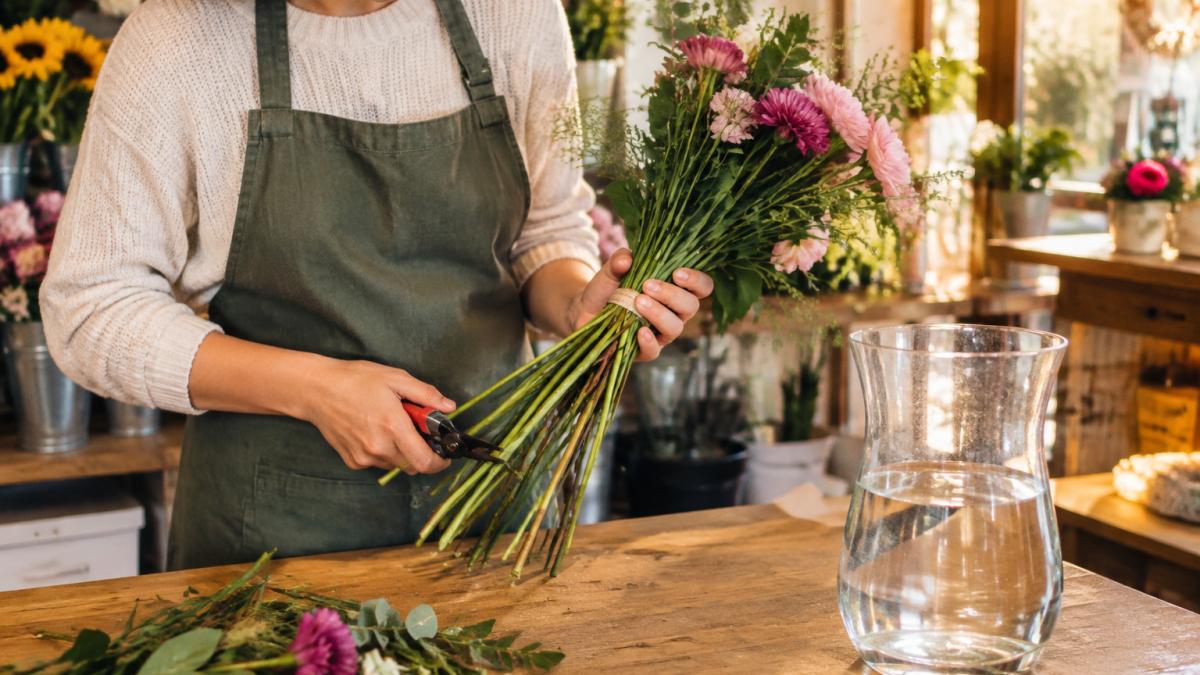
- Trim about an inch off each stem at a sharp angle
- Strip leaves that would sit below the waterline
- Cut stems under running water to keep air out
Watch out: Dirty vases are the most common reason flowers wilt early. Scrub them even if they look clean.
What to Put in Water to Keep Flowers Fresh
Plain tap water keeps a clean bouquet going a few days, but what you add can affect how long blooms last.
What commercial flower food actually does
A standard packet combines sugar to feed stems, an acidifier to lower pH and slow bacteria, and an antibacterial agent to keep water clear.
- Use the full packet with the water amount listed, not a partial packet in a full vase.
- Stir the powder in before adding stems.
- Never top off with plain water and old food, dump, rinse, and remix.
A homemade preservative that works
Without a packet, mix 1 teaspoon of sugar and 1 teaspoon of white vinegar per quart of water. The sugar feeds the blooms; the vinegar slows bacteria.
- Change the water and remix every two days.
- Recut about half an inch off each stem at the same time.
- Keep the ratio steady, more sugar is not better.
Watch out: too much sugar is the most common homemade-recipe mistake. It feeds bacteria as fast as the flowers and clogs stems. If water smells or clouds within a day, dump it and start over with a weaker mix.
Ingredients that are risky or ineffective
- Bleach: A few drops can limit bacteria, but it is easy to overdo and toxic to pets and children. Never combine it with vinegar, mixing bleach and acid releases harmful fumes.
- Vodka or other alcohol: A small splash can slow bacteria but does not feed the flowers.
- Copper pennies: Older pennies can react with water and are unreliable; skip them.
- Aspirin, soda, or mouthwash: Inconsistent and can leave residue that clogs stems.
Water temperature and water quality
Most cut flowers take up cool water well, but stems shipped dry often benefit from lukewarm water (about 100°F) for the first hour. If your tap water is heavily treated or hard, let it sit a few hours before mixing.
Build your own vase-care kit at the flower market
The new DIY flower market inside East End Flowers & Gifts lets you choose your own stems and take home the right supplies in one trip. Pick your blooms, grab a clean vase and a food packet, and ask our team which mix suits your flowers, hydrangea drinks heavily and does better with a full packet, while woody stems prefer a lighter mix. Creating your own arrangement starts with the right water, and our market makes that easy from day one.
How to Keep Flowers Alive Longer in a Vase
Placement and daily habits decide most of a bouquet's vase life, but the biggest variable is the flower itself. Our guide on how to guarantee fresh flower delivery every time shows how reliable delivery and fresh stock give your arrangement a strong start. A tulip and a carnation given the same care will not last the same number of days, so fresh cut flowers need stem-specific attention.
Placement rules that actually matter
- Keep the vase out of direct sunlight and away from heating vents, radiators, and stovetops.
- Move fruit bowls away, ripening fruit releases ethylene gas, which makes buds drop and flowers fade faster, especially carnations.
- Avoid drafty spots near doors and open windows.
Realistic vase-life expectations by flower type
Vase life varies widely by stem.
Woody stems (like lilac or flowering branches) and hollow stems (like delphinium) take up water differently, so trim and refresh them more often. Tropical stems prefer warmer water and dislike cold drafts.
Troubleshooting symptoms and fixes
When an arrangement starts to fail, the symptom usually points to a fixable cause.
- Drooping heads with firm stems: often a water-uptake problem. Recut the stems under water at an angle and move the vase somewhere cooler.
- Cloudy or smelly water: bacteria are winning. Dump the water, scrub the vase, recut the stems, and remix fresh food.
- Bent or rubbery stems: stems may be clogged or the water too warm. Recut and refresh with cool water.
- Wilting hydrangea: submerge the entire bloom head in cool water for about 30 minutes.
- Yellowing leaves below the waterline: leaves left in the water rot and feed bacteria. Strip them and change the water.
- Bud drop: often ethylene exposure. Move the arrangement away from fruit and ripening produce.
Daily habits that add days
- Recut stems about half an inch every time you change the water.
- Remove wilted blooms promptly so they do not spread bacteria.
- Keep the water level above the cut ends at all times; thirsty stems like hydrangea can empty a vase quickly.
- Mist blooms lightly in dry indoor air, but avoid soaking petals that bruise easily.
Choose stems with vase life in mind
The new DIY flower market inside East End Flowers & Gifts lets you build an arrangement around how long you need it to last. For a weekend event, mix long-lasting carnations and chrysanthemums with shorter-lived tulips; for a bouquet that lasts the week, ask our team which stems in the market hold up best right now. Creating your own arrangement is easier when you know each flower's clock, and our market is stocked so you can choose accordingly.
Vase life depends on placement, daily habits and the flower itself, so the table below sums up the main fixes.
| Symptom | Likely cause | Fix |
|---|---|---|
| Drooping heads with firm stems | Water-uptake problem | Recut stems under water at an angle; move to a cooler spot |
| Cloudy or smelly water | Bacteria | Dump water, scrub vase, recut stems, remix fresh food |
| Bent or rubbery stems | Clogged stems or warm water | Recut and refresh with cool water |
| Wilting hydrangea | Dehydrated bloom head | Submerge the whole head in cool water for about 30 minutes |
| Yellowing leaves below waterline | Rotting leaves feeding bacteria | Strip leaves and change the water |
| Bud drop | Ethylene exposure | Move arrangement away from fruit and ripening produce |
How to Keep Flowers Fresh Overnight Without a Fridge
If you need flowers to last a night without a refrigerator, move them to the coolest room in your home, away from windows and heaters. A cool bathroom or basement works well.
Give them fresh water before you leave, make sure the stems are still submerged, and mist the blooms lightly to help them hold up until morning.
Looking for flowers in a hurry? Same Day Flower Delivery Hensley AR: Your Local Guide explains local options for quick orders.
Frequently Asked Questions
What do you put in fresh cut flowers to preserve them?
Start with clean water and a flower food packet. Flower food supplies sugar for energy and an acidifier that helps water move up the stems, while a small antibacterial ingredient limits bacteria. If you have no packet, a common homemade mix is one quart of lukewarm water with a teaspoon of sugar and a teaspoon of white vinegar. Change the water every two days, and recut the stems each time so they can keep drinking.
How often should you change the water in a vase of flowers?
Change the water every two days, or sooner if it looks cloudy or smells sour. Bacteria build up quickly in standing water, and they block the stems from drawing up moisture. Each time you change it, rinse the vase, refill it with fresh water, and trim about half an inch off the bottoms of the stems. This simple routine is one of the most effective ways to extend vase life.
Can you keep cut flowers fresh without flower food?
Yes, though they will usually last a shorter time. Clean water, fresh cuts, and a cool spot away from direct sunlight and heating vents will still help. Removing leaves that would sit below the waterline also prevents rot. For the longest vase life, flower food from your florist is the easiest option, since it combines sugar, acidity, and an antibacterial agent in one packet.