 how-to
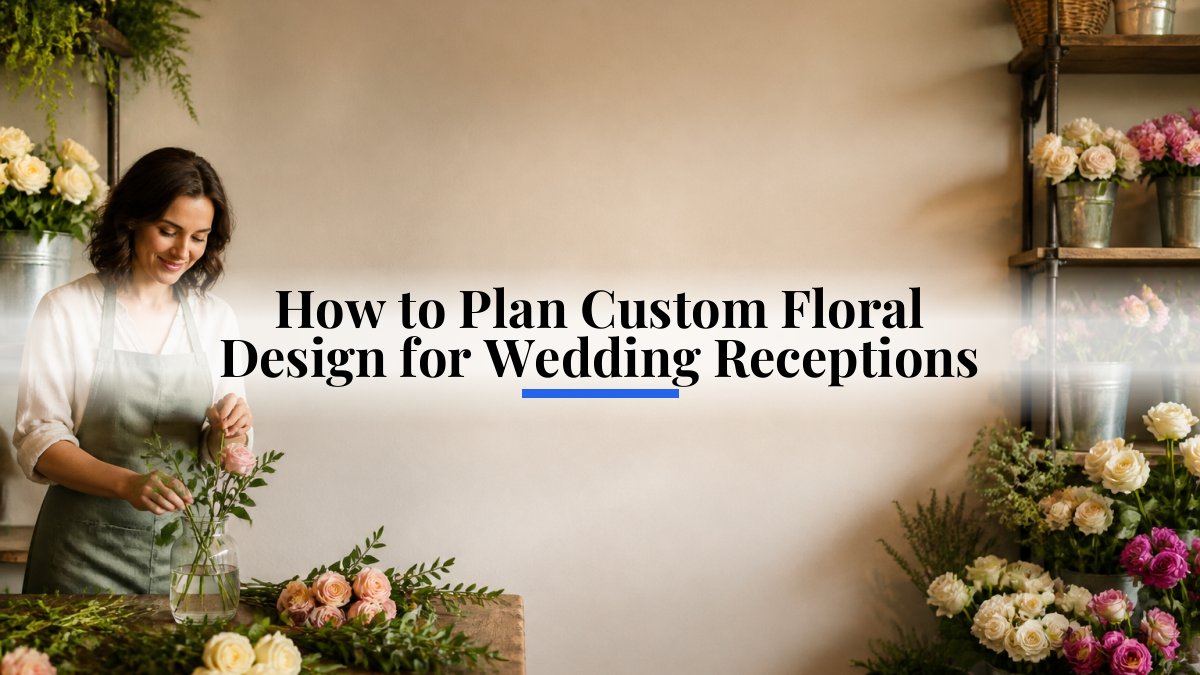
How to Plan Custom Floral Design for Wedding Receptions
Last Updated: October 24, 2026
Quick Summary
Custom floral design for wedding receptions is the process of planning, sourcing, and arranging flowers that match your venue, your style, and your budget. Start by setting your budget and listing must-have pieces, then match centerpiece heights to your room's sight lines and choose seasonal blooms that cost less and last longer.
- Reception flowers have three jobs: set the mood, guide the eye, and survive the night.
- Bring 3 to 5 inspiration images, your venue name, colors, guest count, and a rough budget to your consultation.
- Keep centerpieces either low or high and avoid the middle, which blocks conversation at seated eye level.
- Reuse ceremony flowers such as altar arrangements and aisle markers as reception table pieces or entrance arrangements.
- Build cohesion by repeating a palette, two or three flower types, and one greenery, then varying size and placement.
Table of Contents
- Why Custom Floral Design for Wedding Receptions Starts With a Plan
- Wedding Floral Design Consultation: What to Bring and What to Ask
- How to Set a Wedding Flower Budget Before You Choose a Single Bloom
- Seasonal Wedding Flowers: Choosing Blooms That Hold Up and Cost Less
- Wedding Centerpiece Ideas That Work With Your Venue
- DIY Wedding Flowers: What to Make Yourself and What to Leave to a Florist
- Making Reception Flowers Feel Cohesive Across the Whole Room
- Keeping Reception Flowers Fresh From Delivery to Last Dance
- Build Your Own Reception Flowers at the East End Flowers Market
- Book Your Free Wedding Floral Consultation at East End Flowers
- Frequently Asked Questions
Why Custom Floral Design for Wedding Receptions Starts With a Plan
Custom floral design for wedding receptions is the process of planning, sourcing, and arranging flowers that match your venue, your style, and your budget. It starts long before anyone touches a stem. At East End Flowers & Gifts, we've watched too many couples walk in weeks before the big day with a phone full of photos and no plan. That's the hard way. Below, we'll show you exactly how to build a reception plan that holds up, saves money, and looks like you.
You don't need to be a florist to plan good flowers. You need to know what each arrangement has to do.
What Your Reception Flowers Actually Need to Do
Reception flowers have three jobs: set the mood, guide the eye, and survive the night. That's it. A centerpiece that looks great in a photo but wilts by dinner has failed. A statement piece that blocks sight lines between tables has failed too.
So before you pick a single bloom, ask:
- Where will guests walk, sit, and gather?
- Which tables get the most attention, like the head table and the cake table?
- What time of day is the reception, and how bright is the room?
- Will flowers sit in sun, heat, or air conditioning for hours?
Many couples find that a few well-placed arrangements beat a room full of small ones. If you're starting from scratch, book a consultation and we'll help you map it out for free.
Wedding Floral Design Consultation: What to Bring and What to Ask
A wedding floral design consultation is a sit-down meeting where you share your vision and a florist turns it into a real plan with quantities, flowers, and a quote. Come prepared and you'll get far more out of it.
Bring these to your appointment:
- 3 to 5 inspiration images, not 30
- Your venue name and any photos of the space
- Your wedding colors and any fabric swatches
- Your date, guest count, and table count
- A rough budget range, even a wide one
Then ask these questions:
- Which flowers are in season on my date?
- What can we swap to save money without changing the look?
- How many pieces will my venue actually need?
- When do you deliver, and who sets everything up?
- What's the backup plan if a flower isn't available?
Inspiration Images and the Questions That Save You Money
Photos are a starting point, not a shopping list. A picture of a huge installation may show flowers that cost a fortune or aren't in season. Show your florist the photos, then ask what the look is really made of. Often, the shape and color matter more than the exact bloom.
How to Set a Wedding Flower Budget Before You Choose a Single Bloom
Set your flower budget first, then design to it. Doing it the other way around is how couples blow past their number without noticing.
Start with these steps:
- Decide your total wedding budget and the share flowers can take.
- List your must-have pieces: bouquets, ceremony flowers, centerpieces.
- Mark what's nice to have, like extra greenery or a statement piece.
- Leave a cushion for delivery, setup, and last-minute changes.
Pricing depends on quantity, dates, and delivery, so ask for a written quote. For a deeper walkthrough, read our guide on planning wedding flowers on a budget. A florist who knows your number can design within it from day one.
Seasonal Wedding Flowers: Choosing Blooms That Hold Up and Cost Less
Seasonal wedding flowers are blooms at their natural peak, which means they cost less and last longer. Out-of-season flowers often arrive tired and pricey. Ask what's growing when you say "I do."
Trend reports point the same way. An English Garden's 2026 wedding floral guide names seasonal blooms, bold color, and sculptural shapes as leading themes. Mayesh's 2026 wedding trends article suggests mixing several types of greenery and textural foliage for depth.
Simple Seasonal Substitutions That Keep Your Look Intact
Swap smart, not drastic:
- Garden roses for out-of-season peonies
- Carnations for ranunculus in tight clusters
- Chrysanthemums for dahlias in fall
- Greenery and branches for expensive blooms in big pieces
The look survives. The budget breathes.
Wedding Centerpiece Ideas That Work With Your Venue
Good centerpiece ideas start with the room, not the flower. Before you fall in love with a photo, measure the space and answer three questions: How wide are the tables? How high is the ceiling? How close will guests sit to each other? Those answers decide whether a design works or fights the room.
Match Centerpiece Height to Sight Lines
The single most useful rule for beginners: keep centerpieces either low or high, and avoid the middle. A piece that sits right at eye level when guests are seated blocks conversation across the table. Low designs topping out around 12 inches, or elevated designs that clear the sight line entirely, can keep the table feeling open.
- Low designs sit below the seated eyeline and keep conversation flowing. They suit long family-style tables and lower ceilings.
- Elevated designs lift flowers above eye level on stands or tall vessels. They suit round tables in rooms with high ceilings.
- Avoid the in-between. A centerpiece that lands right at face height is the most common layout mistake we see.
Work With Table Shape and Spacing
Long rectangular tables suit a runner of low, spread-out designs rather than one crowded centerpiece. Round tables suit one fuller piece in the middle, or a cluster of small vessels. Leave enough room for place settings, water glasses, and serving dishes, and check that tall pieces do not crowd the person seated nearest them.
Walk the room as a guest would. Sit at a table and look across it. If you cannot see the person opposite you, the centerpiece is too tall or too wide.
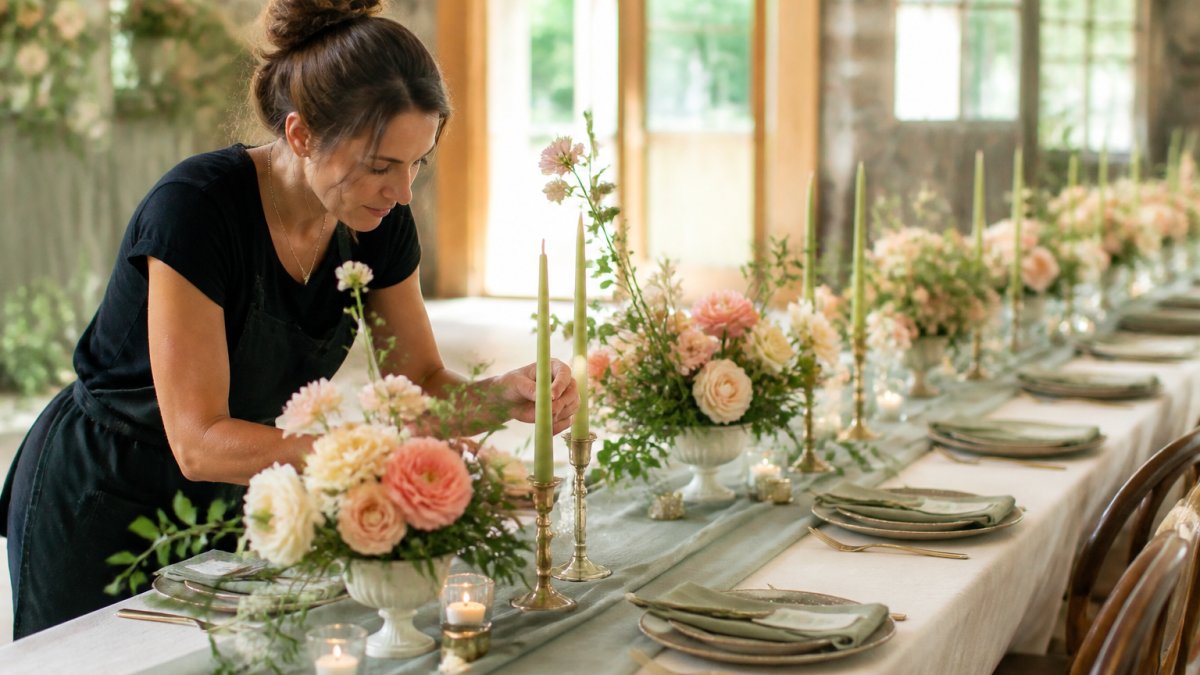
Low, Lush Designs That Feel Full for Less
Trend articles favor low, immersive designs. J. Morris Flowers' 2026 trend report describes "sunken meadow" centerpieces that feel lush without blocking sight lines. That is a smart default for most venues, and it is forgiving for beginners because the shape hides small gaps.
To build that look, start with a low, wide vessel, add a base of greenery, then cluster a few flower types in small groups rather than dotting them evenly. Grouping blooms in odd numbers reads as intentional. Candles and linens do a lot of the visual work for less money, so let them carry part of the design.
Reuse Ceremony Flowers at the Reception
One of the easiest ways to get more centerpiece coverage is to move ceremony pieces to the reception. Altar arrangements, aisle markers, and arch greenery can often be repurposed as table pieces or entrance arrangements. Ask your florist which pieces travel well and who will move them.
If you are unsure what your venue can handle, bring photos and measurements to our free wedding consultation and we will help you map centerpiece heights and spacing before you commit.
Match the design to the room with these centerpiece guidelines.
| Centerpiece type | Best for | Key detail |
|---|---|---|
| Low designs | Long family-style tables and lower ceilings | Sit below the seated eyeline and keep conversation flowing |
| Elevated designs | Round tables in rooms with high ceilings | Lift flowers above eye level on stands or tall vessels |
| In-between height | Nothing, avoid it | Lands at face height and blocks conversation |
| Runner of low designs | Long rectangular tables | Spread out rather than one crowded centerpiece |
| One fuller piece or cluster | Round tables | Fuller piece in the middle or a cluster of small vessels |
| Sunken meadow designs | Most venues | Feel lush without blocking sight lines |
DIY Wedding Flowers: What to Make Yourself and What to Leave to a Florist
DIY wedding flowers work best for simple, forgiving pieces. Leave the high-stakes work to a pro.
Make these yourself:
- Simple bud vases and small clusters
- Loose greenery on tables
- Casual bouquets with sturdy stems
Leave these to a florist:
- Bridal bouquets that must hold their shape all day
- Large installations and arches
- Anything that needs to look perfect in photos
If you want a mix, browse our a la carte wedding flowers and we'll handle the hard parts.
The Biggest Mistakes People Make Arranging Fresh Flowers
A common mistake is arranging flowers dry. Cut stems at an angle and get them in water fast. Others:
- Skipping flower food
- Crowding stems so they can't drink
- Using dirty vases
- Building a design taller than the room allows
Making Reception Flowers Feel Cohesive Across the Whole Room
Cohesion comes from repeating a few things, not copying everything. Pick a color palette, two or three flower types, and one greenery, then vary the size and placement. That is the whole formula. The rest is about where pieces go and how guests move through the room.
Build a Simple Design Brief
A short written brief keeps every piece on the same page, whether you are working with a florist or building pieces at our flower market. Write down:
- Palette: two or three colors, plus one neutral
- Flower types: two or three main blooms and one greenery
- Venue details: table shapes, ceiling height, and any no-floral zones
- Priorities: what matters most, such as the head table or entrance
- Constraints: budget range, setup time, and who transports pieces
Share this brief at your free wedding consultation and it becomes the checklist your florist designs against.
Place Flowers Where Guests Actually Look
Cohesion is also about sightlines. Put the strongest pieces where eyes land: the entrance, the head table, and the cake table. Repeat a smaller version of the same palette on guest tables so the room reads as one design rather than a collection of unrelated arrangements.
- Same flowers, different sizes per table
- Matching linens and candles throughout
- One statement arrangement near the entrance
- Consistent greenery tying tall and low pieces together
Keep the Guest Experience in Mind
Walk the room before the event. Check that centerpieces do not block views of speeches or the dance floor, that tall pieces are stable, and that aisles and serving paths stay clear. Accessibility matters too: leave room for wheelchairs and walkers between tables, and keep low arrangements from crowding place settings.
And remember, our new flower market inside East End Flowers is always open for beginners who want to practice a palette on a small arrangement before the big day.
Keeping Reception Flowers Fresh From Delivery to Last Dance
Fresh flowers need water, shade, and a little planning. Keep arrangements out of direct sun and away from heat vents. Top off water before guests arrive. Ask your florist when pieces were cut and how to care for them.
A few habits help:
- Store extra flowers in a cool room
- Mist delicate blooms lightly
- Move pieces out of the way during dancing
Build Your Own Reception Flowers at the East End Flowers Market
Our new flower market lets you build your own arrangements from fresh stems, right inside the shop. Pick your blooms, choose a vase, and design something that's yours. It's a relaxed way to try DIY without buying a whole bucket of flowers.
Want a head start? You can order custom event flowers and build on them at the market. Beginners welcome. We'll point you to stems that hold up and show you how to keep them fresh longer.
Book Your Free Wedding Floral Consultation at East End Flowers
Planning flowers shouldn't feel like a test. If you're stuck, we offer a free wedding consultation to walk you through it. Bring your photos and your budget, and we'll help you build a plan that fits.
At East End Flowers & Gifts, we offer custom flower design, same-day delivery, and local delivery to funeral homes and hospitals. Schedule your appointment and let's design something beautiful together.
Frequently Asked Questions
How do you choose flowers for a wedding reception?
Start with your venue and your color palette, then work backward to blooms. A custom floral design plan usually picks one or two statement flowers for the head table and bridal bouquet, then fills the rest with seasonal flowers and greenery that cost less. Bring inspiration images to a wedding floral design consultation so your florist can match the look to what is actually in season. East End Flowers offers a free consultation to walk beginners through this step by step.
How far in advance should you plan wedding flowers?
Most couples start the conversation three to six months before the wedding, and four months is a comfortable window for a custom floral design. That gives time for a consultation, a written plan, and adjustments as your guest count firms up. Seasonal wedding flowers are easier to secure with lead time, and popular dates fill up. If your date is closer, call anyway; a good florist can often work with what is available.
Can you create your own wedding reception flower arrangements?
Yes, and DIY wedding flowers work well for centerpieces, bud vases, and greenery runners. The East End Flowers market lets you build your own designs from fresh stems, which keeps costs down and gives you control over the look. Leave bouquets, ceremony pieces, and anything with a tight timeline to a florist. A common mistake is underestimating setup time, so plan for help and keep a few extra stems on hand.
How can you make wedding reception flowers feel cohesive?
Repeat three things across every arrangement: a defined color palette, one or two signature flowers, and consistent greenery. Vary the size and shape instead, with low centerpieces on guest tables and a taller statement arrangement at the head table. Reusing ceremony flowers at the reception is the easiest way to stretch a budget and keep the look unified. Ask your florist to plan both spaces together rather than as separate projects.
Your reception flowers can look like the photos you've saved, and you don't have to figure it out alone. Get started with East End Flowers & Gifts and build a floral plan that fits your venue, your style, and your budget.