 ultimate-guide
Planning Wedding Flowers on Budget: A 2026 Guide
Table of Contents
- Planning Wedding Flowers on Budget: Start With Your Numbers
- Wedding Flower Budget Breakdown by Arrangement
- Budget Wedding Flower Ideas That Look Expensive
- How to Save Money on Wedding Flowers: Practical Tactics
- Wedding Flower Planning Checklist: From Date to Delivery
- DIY vs. Hiring a Florist: Making the Right Call
- Seasonal Substitutions and Flower Flexibility
- Frequently Asked Questions
Last Updated: October 19, 2026
Planning Wedding Flowers on Budget: Start With Your Numbers
When planning wedding flowers on budget, first understand how much to spend. Flowers are one of the most flexible wedding line items, unlike catering or venue costs, you control expenses through what you prioritize, when you order, and where you source blooms.
What percentage of your total wedding budget should go to flowers?
Most wedding budgets allocate 5-10% toward flowers and décor combined, a $20,000 wedding might have $1,000-$2,000 for all floral work.
The real question is what percentage makes sense for YOUR priorities. If flowers are central to your aesthetic, budget toward the higher end; if secondary, trim significantly without sacrificing impact.
Breaking down costs by arrangement type
Understanding where costs accumulate helps you make smarter cuts. A bridal bouquet costs more per stem than a centerpiece because it's hand-held and visible close-up.
Itemize what you actually need, then assign rough budgets to each category, this prevents overspending on arrangements that matter less while ensuring you invest in the pieces guests notice most.
Wedding Flower Budget Breakdown by Arrangement
Different floral elements serve different purposes and carry different price tags. Understanding this breakdown helps you allocate your budget strategically.
Bridal bouquet
Your bridal bouquet is the most visible and photographed arrangement, held close to your body and appearing in every photo.
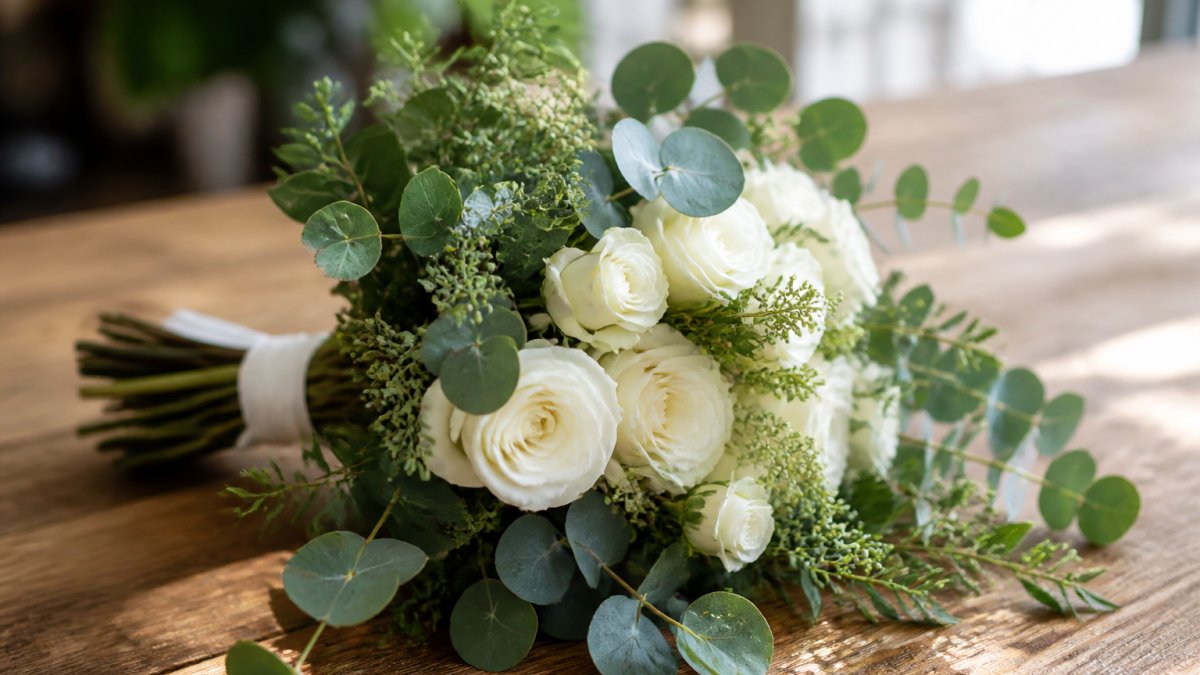
A bridal bouquet typically includes 20-30 stems of focal flowers (roses, peonies, dahlias), 10-15 stems of secondary flowers (spray roses, ranunculus, lisianthus), and generous greenery and filler.
Decide early whether to preserve your bouquet after the wedding, some couples skip preservation to save money, others see it as a keepsake worth the investment.
Bridesmaids bouquets and boutonnieres
Bridesmaids' bouquets are smaller and simpler than the bridal bouquet. With four bridesmaids you multiply this cost four times, so keeping these arrangements simplified controls overall expenses.
Boutonnieres are cost-effective at only 3-5 stems each, but easy to overlook.
The most budget-conscious approach is using the same flowers for bridesmaids' bouquets and boutonnieres as your bridal bouquet, visual cohesion with fewer varieties to source.
Ceremony flowers and focal points
Ceremony flowers frame where the action happens and create a photo backdrop.
Consider what actually needs flowers: the altar, the aisle entrance, and a few key spots. A few large, impactful arrangements create more visual impact than many small ones scattered around.
This is where repurposing pays off: ceremony flowers can often move to the reception afterward, giving two uses from one investment. Plan this transition early to budget for fewer total arrangements.
Reception centerpieces and table arrangements
Reception centerpieces are high-volume items: 15 tables means 15 centerpieces, 30 cocktail tables means 30. The sheer quantity makes this category significant even if individual arrangements are modest.
Vary centerpiece styles: maybe 10 tables get full floral arrangements while five get simple candles with a few stems, visual interest with less total flower volume.
Budget Wedding Flower Ideas That Look Expensive
The gap between what flowers cost and how impressive they look is where real savings happen. Strategic design choices make modest arrangements appear lavish.
Choosing in-season blooms and popular flower varieties
In-season flowers are significantly cheaper because they're abundant and need no special sourcing.
Popular varieties that work across budgets include roses, spray roses, ranunculus, lisianthus, and dahlias, widely available, reasonably priced, reliable, long-lasting, and visually striking in nearly any aesthetic.
Seasonal substitutions are your secret weapon: instead of imported orchids in winter, choose amaryllis, hellebores, or hypericum berries; instead of pricey garden roses in fall, opt for dahlias or zinnias.
Using greenery and filler to stretch your stems
Greenery and filler are dramatically cheaper than focal flowers but create volume and texture.
Eucalyptus, ruscus, salal, and leather leaf are budget-friendly greenery; waxflower, baby's breath, or statice are inexpensive but effective fillers.
Use greenery strategically so it enhances rather than overwhelms: mostly greenery with a few focal flowers reads as intentionally minimalist, while mostly focal flowers with greenery accents reads as lush and full.
Focal point strategy: where to splurge and where to save
Not every arrangement deserves the same budget.
Identify the three to five most visible floral moments, your bouquet, the ceremony backdrop, perhaps the sweetheart table arrangement, and allocate 40-50% of your flower budget there.
This tiered approach keeps your most important moments stunning while your overall flower budget stays reasonable.
How to Save Money on Wedding Flowers: Practical Tactics
Beyond choosing affordable flowers, concrete tactics can substantially reduce your total spending.
Buying wholesale or in bulk from flower markets
Wholesale flower markets sell directly to florists and businesses, bypassing retail markups, and some allow public access on weekday mornings.
The trade-off: you're responsible for design, conditioning, and logistics, picking up flowers early on your wedding day, having space to store and arrange them, and possessing basic arranging skills.
Local flower markets may allow walk-in purchases or require advance ordering, and some have minimum purchases or specific ordering windows, call ahead to understand policies and pricing.
Repurposing ceremony flowers at the reception
This is one of the highest-impact money-saving tactics: plan ceremony flowers to work in your reception space, then have florists or trusted helpers move arrangements from the ceremony site to the reception venue afterward.
This requires advance planning with your florist: containers must work for both spaces and timing must account for reception setup. The savings are substantial, two uses from one set of arrangements.
DIY wedding flowers: logistics, timing, and care
Arranging your own flowers is possible but requires flower care knowledge, design principles, and realistic time management.
DIY requires purchasing flowers 1-2 days before, conditioning them the night before or morning of, and arranging everything 2-4 hours before your ceremony.
DIY logistics work best for small weddings with simple designs, a 150-person wedding with elaborate centerpieces and multiple arrangement types becomes challenging.
Grocery-store and accessible flower sources
Grocery store flowers cost 50-70% less than florist pricing, but quality varies, they're often harvested earlier and have shorter vase lives. For budget weddings, they're a legitimate option when selected carefully.
Shop 2-3 days before your wedding, choosing stems that are just opening.
Warehouse clubs, farmers markets, and online flower delivery services also offer budget options. The key is being flexible about variety and accepting that you're trading cost for consistency and premium quality.
Wedding Flower Planning Checklist: From Date to Delivery
Successful budget flower planning requires systematic tracking and decision-making.
Timeline and ordering deadlines
Start planning flowers 3-4 months before your wedding, especially for peak season (May-October) dates, to compare options, make decisions, and secure your preferred florist or wholesale source.
Contact potential florists 2-3 months out with your wedding date, guest count, venue, and rough budget.
Finalize your flower order 2-3 weeks before the wedding so the florist can source specific varieties and plan logistics.
Quantity calculator and stem counts
Calculate quantities based on guest count and arrangement types. A rough guide:
- Bridal bouquet: 25-35 stems
- Each bridesmaids bouquet: 12-18 stems
- Each boutonniere: 4-6 stems
- Each centerpiece: 15-25 stems (depending on size)
- Ceremony arrangements: 40-60 stems each
For 100 guests with 10 tables, 5 bridesmaids, and standard ceremony flowers, you might need approximately:
- 1 bridal bouquet: 30 stems
- 5 bridesmaids bouquets: 75 stems
- 6 boutonnieres: 30 stems
- 10 centerpieces: 175 stems
- 2 ceremony arrangements: 100 stems
- Total: approximately 410 stems
This is a starting point. Adjust based on your specific design and preferences.
Hidden costs and delivery considerations
Beyond the flowers, budget for delivery fees, setup fees, and special requests.
Seasonal pricing affects costs. Flowers are most expensive around Valentine's Day and Christmas. Wedding season (May-October) brings higher prices than off-season months. Your wedding date directly impacts what you'll pay.
Ask what's included: delivery? Venue setup? Flower conditioning? Backup flowers if stems arrive damaged? Understanding this prevents surprise charges on your wedding day.
DIY vs. Hiring a Florist: Making the Right Call
This decision affects your budget, timeline, and stress level.
Hiring a professional florist means expertise, consistency, and one point of contact for all flower logistics, they source, design, deliver, and manage problems.
East End Flowers & Gifts offers custom floral design services that balance professional expertise with your budget, we can design your vision, source seasonal blooms, and handle delivery logistics.
Seasonal Substitutions and Flower Flexibility
Your wedding date determines what flowers are naturally available and affordable. Working WITH your season saves money and often produces better results.
If you're set on out-of-season flowers, expect premium sourcing prices, a bride wanting peonies in December pays significantly more than one choosing winter-appropriate flowers.
Planning wedding flowers on a budget doesn't mean compromising on beauty, it means making strategic choices about what matters most to your vision.
Frequently Asked Questions
What's a good budget for flowers for a wedding?
Wedding flower budgets typically range from 8-12% of your total wedding budget, though this varies by guest count and complexity. For a 100-guest wedding, couples often allocate $800-$1,500 for all floral arrangements combined. Your actual spend depends on whether you hire a florist, buy wholesale, or go the DIY route. Request a quote from local florists to understand pricing for your specific vision and wedding date.
How can you save money on wedding flowers without sacrificing style?
Choose in-season blooms, which cost significantly less than out-of-season varieties. Buy wholesale or in bulk from flower markets rather than retail. Use greenery and filler stems to add volume without expense. Repurpose ceremony flowers at the reception by moving arrangements to tables. Consider a smaller bridal bouquet with larger bridesmaids arrangements, or use grocery-store flowers for secondary arrangements. Hiring a florist to design focal pieces while you handle simpler centerpieces is also cost-effective.
Which wedding flowers are usually the most affordable?
Roses, carnations, alstroemeria, and waxflower are consistently budget-friendly. Seasonal blooms like sunflowers in summer or dahlias in fall cost less than year-round imports. Greenery such as eucalyptus, ruscus, and Italian ruscus stretches your budget because they're inexpensive but add visual impact. Avoid premium flowers like peonies and garden roses unless they're in season. Ask your florist or flower market about what's freshest and cheapest during your wedding month.
Can you DIY wedding flowers without overspending?
Yes, but plan carefully. Buy wholesale 1-2 days before your wedding to ensure freshness. You'll need floral foam, wire, tape, and vases, budget $50-$200 for supplies. Arrange flowers the morning of or day before, and keep them in cool water. DIY works best for simple arrangements like centerpieces and ceremony flowers; bridal bouquets require more skill. Start with in-season, sturdy varieties like roses and carnations. Many couples save 30-50% by DIYing secondary arrangements while hiring a florist for the bridal bouquet.
What is the 3-5-8 rule for wedding bouquets?
This is a design principle for bridal bouquets: use 3 types of flowers, 5 stems of your focal flower, and 8 stems total for a balanced, elegant look. This rule helps you create a professional-looking bouquet without overbuying stems. For a fuller bouquet, scale up proportionally (e.g., 7 focal stems, 12 total). It's a helpful guide for DIY designers or when discussing your vision with a florist.
How many flowers do I actually need for a 100-guest wedding?
For a 100-guest wedding with 10 tables, budget roughly: 1 bridal bouquet, 5 bridesmaids bouquets, 6 boutonnieres, 2-4 ceremony focal arrangements, and 10 centerpieces (1 per table). That's approximately 200-300 stems depending on arrangement density. Add 10-15% extra for backup. If you're repurposing ceremony flowers at tables, you'll need fewer total stems. A florist can provide a precise estimate based on your venue, color palette, and arrangement style.
What hidden costs should I watch for when ordering wedding flowers?
Watch for delivery fees (often $25-$75), setup fees if the florist arranges flowers on-site, rush fees for short notice, and charges for specialty vessels or rentals. Some florists charge extra for weekend weddings or out-of-area delivery. Confirm whether the quoted price includes all arrangements or if certain items cost extra. Ask about cancellation policies and whether you own the vases or must return them. Get a detailed, itemized quote in writing before committing.