
 blog
Which Flowers Are Best for Hospital Patients?
Last Updated: November 7, 2026
Quick Summary
The best flowers for hospital patients are bright, low-scent blooms that fit in a small space and are easy to care for, such as tulips, gerbera daisies, alstroemeria, and carnations. Before ordering, call the patient's specific unit, since some wards restrict fresh flowers entirely and rules vary by facility.
- Choose a compact arrangement that fits on a crowded bedside table.
- Avoid strongly scented blooms like gardenias, lilies, and hyacinths.
- Skip flowers with pollen, which can cause sneezing and irritation.
- Call the unit's nurses' station, not just the main line, before ordering.
- Confirm the patient is still admitted the morning of delivery.
Table of Contents
- Choosing Flowers for a Hospital Patient: What Matters Most
- Get Well Soon Flowers That Work Well in a Hospital Room
- What Color Flowers for Hospital Patients Lift the Mood Best
- Get Well Flowers After Surgery: Scent, Allergies and Easy Care
- Alternatives to Flowers for Hospital Patients and Booking Your Delivery at East End Flowers & Gifts
- Frequently Asked Questions
Choosing Flowers for a Hospital Patient: What Matters Most
East End Flowers & Gifts helps Hensley-area families pick flowers for loved ones in local hospitals. The best flowers for hospital patients are usually bright, low-scent blooms that fit in a small space and are easy to care for.
Most people think bigger is better. In a hospital room, it often isn't. A compact arrangement fits on a crowded bedside table, and a huge bouquet can crowd out a water pitcher or a medication cup.
Research has found that plants and flowers in hospital rooms can make a real difference (pubmed.ncbi.nlm.nih.gov). A 2009 study of ornamental indoor plants in hospital rooms reported that patients said plants brightened the room, reduced stress, and gave a positive impression of hospital staff.
How to Verify a Hospital's Flower Policy Before You Order
Policies vary by facility and by ward, so a single "yes" or "no" is not enough. Use this checklist before you place an order:
- Call the main hospital line and ask for the nurses' station on the patient's specific unit. The front desk may not know unit-level rules.
- Confirm whether fresh flowers are allowed at all. Some facilities ban cut flowers entirely; others allow them in private rooms but not in shared rooms.
- Ask about restricted units. Some units, such as intensive care or transplant units, may restrict fresh flowers and plants.
- Ask about vase and container rules. Some units require a sealed, spill-proof container or prohibit glass.
- Confirm the patient's room number and whether the patient is still admitted. Discharge status changes daily, and a delivery to a discharged patient is a failed delivery.
- Ask about visiting hours and delivery windows. Many hospitals accept deliveries only during certain hours, and some require the florist to leave arrangements at a central desk rather than the room.
- Ask whether the patient can receive deliveries at all. Some patients request no visitors or deliveries; respect that.
A common pattern is that families call once, get a general answer, and then learn at delivery that the specific unit has a stricter rule. Calling the unit directly, not just the main line, prevents most rejected deliveries.
What to Keep in Mind When You Choose
- Check the unit first. Some units restrict fresh flowers.
- Pick low-scent blooms. Strong fragrance can bother patients who feel sick.
- Choose a sturdy, small container. It should sit safely on a tray table.
- Skip anything with pollen. Pollen can cause sneezing and irritation.
Watch out: Some hospitals restrict fresh flowers in certain units. Call the nurses' station before you order, and confirm the patient's room and discharge status the morning of delivery.
If you want to build the arrangement yourself, our new DIY flower marketplace inside East End Flowers lets you create your own design.
Use this checklist to see what a hospital unit may allow before you order.
| Check | Why it matters | Action |
|---|---|---|
| Unit-level rules | Front desk may not know | Call the unit's nurses' station |
| Fresh flowers allowed | Some facilities ban cut flowers | Confirm for the specific ward |
| Restricted units | Intensive care and transplant units may restrict | Ask before ordering |
| Vase rules | Some units require spill-proof containers | Ask about glass and containers |
| Patient still admitted | Discharged patients cannot receive delivery | Confirm room and status the morning of delivery |
| Delivery windows | Some hospitals accept deliveries only at set hours | Ask about visiting hours and drop-off desk |
Get Well Soon Flowers That Work Well in a Hospital Room
Tulips, daisies, and gerbera daisies are reliable choices for a get well soon arrangement. Our guide on how to guarantee fresh flower delivery every time explains how to make sure delivered flowers arrive in good condition. They come in cheerful colors, have mild or no scent, and last well in a vase.
Here are flowers we recommend for a hospital bouquet:
- Tulips: Bright, clean, and mostly scent-free
- Gerbera daisies: Cheerful colors and sturdy stems
- Alstroemeria: Long-lasting with almost no fragrance
- Carnations: Ruffled, low-scent, and budget-friendly
Avoid heavy scents like gardenias, lilies, and hyacinths. Those blooms can overwhelm a small room.
For more ideas on keeping your flowers looking good, read our guide on how to preserve fresh cut flowers at home.
What Color Flowers for Hospital Patients Lift the Mood Best
Bright colors usually lift a patient's mood. Yellow and orange feel warm and sunny, while pink and purple feel gentle and calming. Many people also find that soft white blooms look clean and peaceful beside a hospital bed.
Think about the patient's taste, too. A patient who loves gardens may enjoy a mix of sunflowers and snapdragons. A patient who prefers quiet might like soft pastels.
If you are unsure, go with a mix of two or three colors. That gives the arrangement a fresh look without feeling too busy.
Get Well Flowers After Surgery: Scent, Allergies and Easy Care
After surgery, patients often feel sensitive to smells and noise. Choose low-fragrance flowers like irises, daffodils, and tulips. Avoid bouquets with strong pollen, such as lilies, because pollen can stain bedding and cause sneezing.
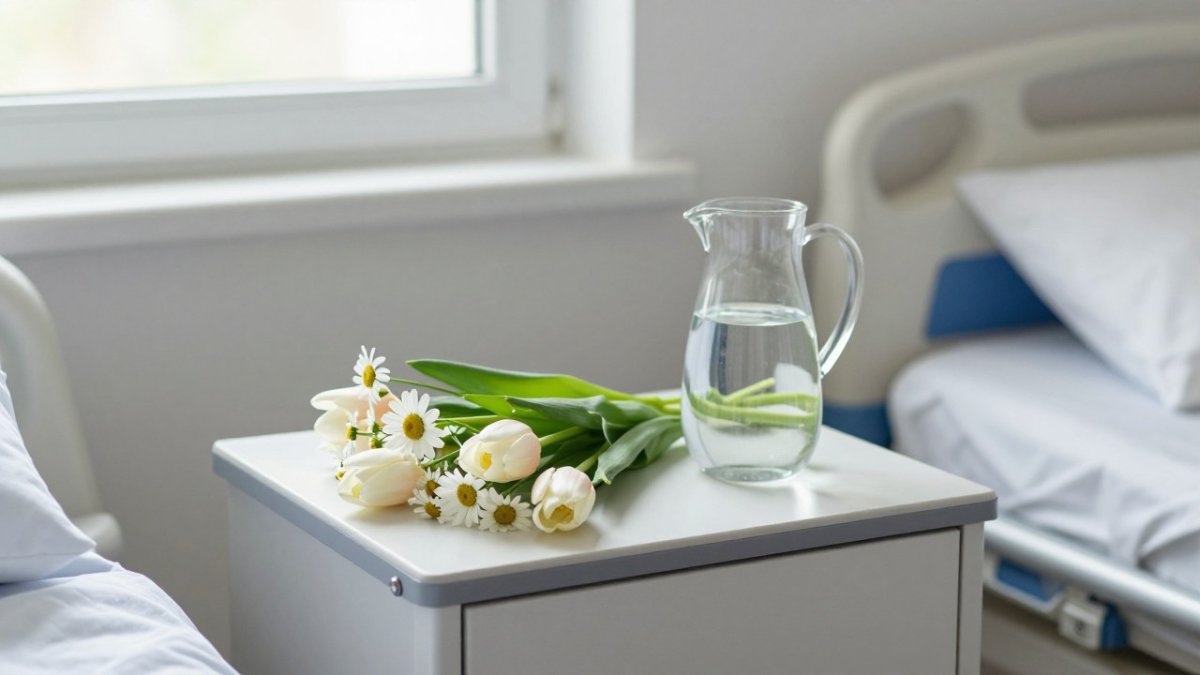
Easy care matters too. A patient may not be able to change water or trim stems.
Watch out: Patients with allergies or breathing problems should not get heavily scented blooms. Ask the patient or a family member what they can tolerate.
Alternatives to Flowers for Hospital Patients and Booking Your Delivery at East End Flowers & Gifts
Sometimes flowers are not allowed. In those cases, a potted plant, a balloon, or a small gift basket can work well.
Non-Floral Alternatives When Flowers Are Restricted
When a unit bans cut flowers, the thoughtful move is to send something that still says "get well" without breaking the rules:
- Potted plants where permitted. Many units that ban cut flowers still allow potted plants, but confirm first; some restrict soil and live plants for infection-control reasons.
- Silk or dried arrangements. These need no water and no care, and they do not trigger pollen or scent concerns.
- Greeting cards and handwritten notes. A card is always allowed and often kept longer than flowers.
- Small gift baskets. Think comfort items the patient can actually use, such as lip balm, unscented lotion, or a puzzle book.
- Balloons. Confirm the unit allows them; some restrict latex or require mylar only.
- A gift card to the hospital cafeteria or a nearby shop. Practical and easy for family to use.
A common pattern is that families default to flowers and then scramble when the unit says no. Asking about alternatives at the same time you ask about the flower policy saves a second call.
Accessible, Low-Maintenance Arrangement Design
If flowers are allowed, design for a patient who may not be able to change water or trim stems:
- Use a spill-proof, weighted container. A vase that tips easily is a hazard near medical equipment and IV lines.
- Keep the arrangement compact. A footprint of roughly a small tray table is the practical limit in most shared rooms.
- Choose long-lasting stems. Alstroemeria and carnations hold up for days without attention.
- Place the vase where a nurse or family member can reach it, not where the patient has to stretch.
- Skip strong scent and heavy pollen. Both can bother a patient who is already uncomfortable.
If you want to design the arrangement yourself, our new DIY flower marketplace inside East End Flowers lets you create your own design.
Delivery Logistics and Timing
If you want flowers delivered, East End Flowers & Gifts offers same-day delivery for last-minute needs. To reduce failed or delayed deliveries:
- Confirm the patient's room number and ward the morning of delivery.
- Confirm the patient is still admitted. Discharge status changes daily.
- Confirm visiting hours and delivery windows. Some hospitals accept deliveries only during certain hours.
- Ask whether the florist can deliver to the room or must leave the arrangement at a central desk.
Check with the hospital first, then book your local flower delivery with East End Flowers & Gifts.
Our team also offers same-day flower delivery in Hensley, AR when you need flowers fast.
Frequently Asked Questions
What flowers are best for hospital patients?
Choose flowers with mild or no fragrance and low pollen, since strong scents can bother patients who feel nauseated or congested after surgery. Tulips, gerbera daisies, and alstroemeria are often chosen because they hold up well and rarely overwhelm a small room. Cheerful colors such as yellow, pink, and orange are often a good choice. A compact arrangement in a sturdy container is easier to place on a bedside table. Before ordering, confirm the hospital allows flowers, since some units restrict them.
Are flowers allowed in hospital rooms?
Many hospitals allow flowers, but policies vary by unit and sometimes by floor. Intensive care units, transplant units, and some infection-control areas often restrict fresh flowers entirely. Check the hospital's visitor or patient information page, or call the nursing station before you order. If flowers are not allowed, a silk arrangement or a non-floral gift may be a better choice. Local florists who deliver to hospitals can often tell you what the facility permits.
What to send someone in the hospital instead of flowers?
If flowers are restricted, consider a balloon bouquet, a soft blanket, a book or magazine, a phone charger, or a gift basket with snacks the patient can eat. Silk or dried arrangements are useful alternatives in units that ban fresh flowers. Keep in mind that some hospitals limit food, so check before sending edible gifts. A handwritten card with a short, encouraging message can matter as much as the gift itself.
How do you choose flowers for a hospital patient with allergies?
Pick flowers that are low in pollen and fragrance, such as tulips, roses with the stamens removed, or gerbera daisies. Avoid lilies, which can be strongly scented, and avoid mixed bouquets with many pollen-heavy blooms. Ask the patient or family what they can tolerate when possible. Keep the arrangement small and away from the bed so scent does not build up, and remove wilted blooms promptly.