 How-to
How to Choose a Wedding Florist for a Small Ceremony
Last Updated: November 15, 2026
Quick Summary
A good wedding florist for a small ceremony matches your style, budget and timeline. Start by setting your floral budget and guest count, shortlist three to five florists, review their portfolios, and compare written proposals line by line. Book six to twelve months ahead.
- Write down your total floral budget, guest count, and must-have flowers before you call anyone.
- Review portfolios for small ceremony work, not just large-scale events.
- Compare minimum spend, delivery, setup, labor, and cancellation terms on every proposal.
- The lowest flower subtotal is not always the lowest total cost.
- Book six to twelve months ahead and get all answers in writing.
Table of Contents
- Start With Your Floral Budget and Guest Count
- Step-by-Step: Choosing a Wedding Florist for Small Ceremonies
- Compare Proposals, Minimum Spends, and Service Levels
- Questions to Ask a Wedding Florist Before You Book
- Wedding Ceremony Flower Ideas That Work for Small Guest Lists
- Use a Wedding Flower Checklist Before You Sign
- Frequently Asked Questions
Start With Your Floral Budget and Guest Count
Choosing a wedding florist for a small ceremony starts with money and guest count. Most couples find that a smaller guest list makes the flowers more affordable, but the cost still depends on how much design work you want. Plan your budget first, then shop for florists who fit it.
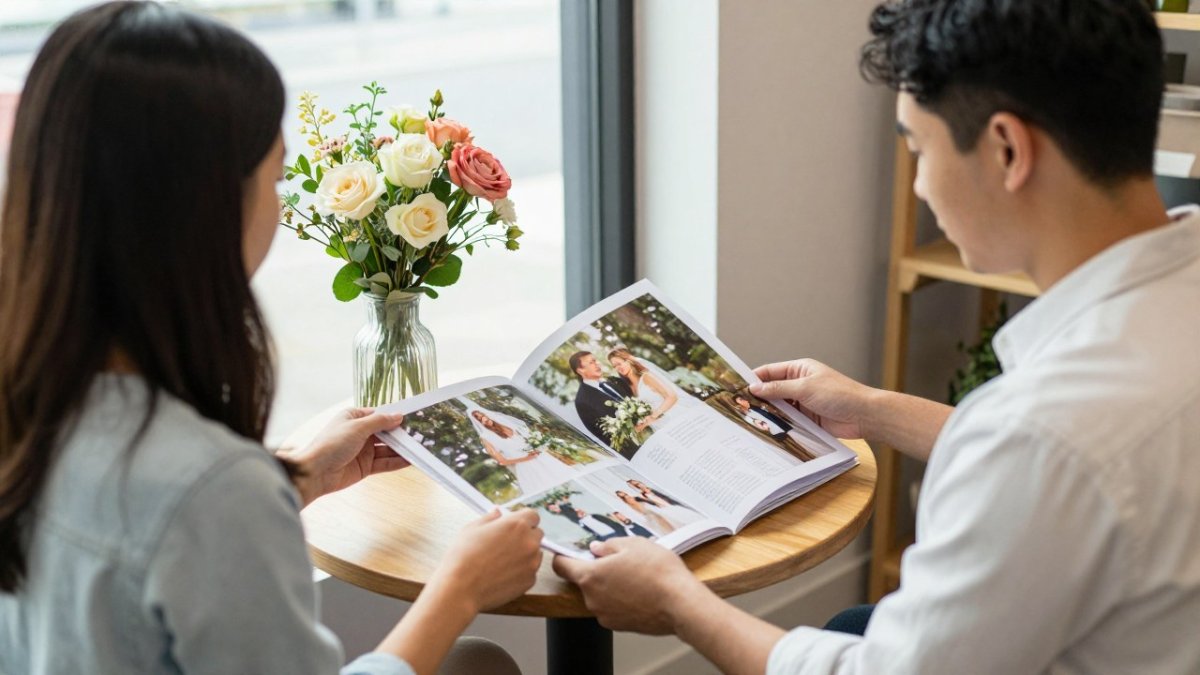
For intimate weddings with fewer than 50 guests, one published estimate puts flowers at $1,500 to $3,500 (WeddingVendors.store 2026 wedding florist budget guide).
Before you call anyone, write down three things:
- Your total floral budget
- Your guest count
- The must-have flowers, such as bridal bouquet, ceremony arch, or a few centerpieces
Knowing these three items helps you ask better questions and compare quotes fairly. For practical budget planning, read our planning wedding flowers on budget guide.
Step-by-Step: Choosing a Wedding Florist for Small Ceremonies
A good wedding florist for a small ceremony should match your style, your budget, and your timeline. Follow these steps in order so you do not waste time on florists who cannot help you.
- Make a shortlist. Start with three to five local florists. Look at reviews and recent work.
- Check availability. Ask whether they can handle your date. Industry guidance suggests booking six to twelve months ahead (Our Vows guide to choosing a wedding florist).
- Review their portfolio. Look for arrangements that look like what you want.
- Request proposals. Ask for written quotes that list every item.
- Compare and choose. Pick the florist whose style, service, and price make sense together.
Review Portfolios and Match Each Florist's Style
A portfolio tells you more than any sales pitch. Look for photos of small ceremonies, not just large-scale events. A florist who does big, lush installations may not be the right fit for a simple backyard vow.
Trends matter too. Current wedding floral design leans toward refined, elegant arrangements rather than oversized displays (Mayesh micro-wedding floral trends for 2026). If you want that look, choose a florist whose portfolio already shows it.
Ask yourself these questions:
- Do the colors and shapes match my vision?
- Do the arrangements look fresh, balanced, and well made?
- Can I see photos of ceremony pieces, not just bouquets?
Compare Proposals, Minimum Spends, and Service Levels
Two proposals can look similar and still land very differently once minimum spends, delivery, labor, and setup are added in. For a small ceremony, the line items that matter most are often the ones couples forget to compare.
Read each proposal for these items:
- Minimum spend. Many florists set a minimum order for wedding work, and a small ceremony can fall below it. Ask whether the minimum applies to flowers only or to the full invoice, and whether delivery and setup count toward it. If your order is under the minimum, ask whether you can add a la carte pieces, such as bud vases or a welcome arrangement, to reach it rather than paying a shortfall fee.
- Delivery and setup fees. Confirm whether delivery, on-site setup, and breakdown are included or billed separately. A florist who delivers boxes for you to place yourself will quote less than one who arrives, installs an arch, and returns for pickup. Compare the all-in total, not the flower subtotal.
- Service level. Decide up front whether you want full service, partial help, or a do-it-yourself approach. Full service covers design, delivery, setup, and breakdown. Partial service might cover personal flowers and centerpieces but leave installation to you. DIY means you buy stems or kits and build the pieces yourself.
- Labor and design time. Design time and on-site labor often cost more than the stems themselves, especially for arches and installations that take two people to set. Ask how labor is calculated, whether it is hourly or flat, and whether it changes if your guest count shifts.
- Substitution and cancellation terms. Ask what happens if a variety is unavailable, how far ahead substitutions are decided, and what the cancellation and deposit schedule looks like. Get these in writing.
A common pattern is that the lowest flower subtotal is not the lowest total. A florist with a higher stem price but included delivery and setup can beat a cheaper quote once fees are added.
Watch out: a proposal that quotes a single lump sum without itemizing minimum spend, delivery, labor, and setup is hard to compare and easy to inflate later. Ask for the breakdown before you sign.
If you want to handle part of the work yourself, our new DIY flower marketplace inside East End Flowers lets you create your own designs.
Use this quick reference to compare the key line items in each florist proposal before you choose.
| Item | What to check | Why it matters |
|---|---|---|
| Minimum spend | Applies to flowers only or full invoice | Small orders may fall below it |
| Delivery and setup | Included or billed separately | Changes the all-in total |
| Service level | Full, partial, or DIY | Sets how much work you handle |
| Labor | Hourly or flat, and whether it changes | Often costs more than stems |
| Substitution and cancellation | Written terms and deposit schedule | Protects you if plans change |
Questions to Ask a Wedding Florist Before You Book
Use these questions during your first call or consultation:
- Do you work with small ceremonies, and what is your minimum spend?
- Can I see photos of ceremony arrangements similar to mine?
- What is included in your proposal, and what costs extra?
- Who will create my flowers, and will they set up on the day?
- How far in advance should I book, and what deposit do you require?
- What happens if flowers are not available in my chosen colors?
Get the answers in writing. Verbal promises are easy to forget.
Wedding Ceremony Flower Ideas That Work for Small Guest Lists
Small ceremonies need flowers that have impact without overwhelming the space.
Consider these ideas, scaled to an intimate guest list:
- One ceremony focal point. A single arch, arbor, or backdrop behind the couple does more visual work than scattered arrangements. Ask whether the structure is rented or built, who installs it, and whether it can move to the reception.
- Personal flowers first. Bouquets for the couple, boutonnieres for the wedding party and immediate family, and a small corsage or two cover the photos guests see most. These are the pieces worth protecting in the budget.
- Aisle and altar accents. Petite arrangements along the aisle or at the altar can be as simple as clustered bud vases or potted plants that double as favors. Keep them low enough that seated guests can see over them.
- Table arrangements that multitask. Centerpieces can start at the ceremony as altar or entry pieces and move to the tables. Plan the move with your florist so the containers and mechanics survive the trip.
Repurposing is the smartest budget lever for a small ceremony. Bouquets can become table arrangements in low vessels. Aisle flowers can line a head table or dessert table.
Watch out: flowers moved from a warm ceremony space to a cool reception, or from water to foam, can wilt faster than expected. Ask your florist which pieces travel well and which should stay put.
Season matters too. Choosing seasonal flowers can help you plan your arrangements.
Use a Wedding Flower Checklist Before You Sign
Before you sign a contract, run through this checklist:
- Floral budget and guest count are written down
- Portfolio reviewed and style matches your vision
- Written proposal with a full line-item breakdown
- Minimum spend, delivery, and setup fees confirmed
- Booking date, deposit, and cancellation terms checked
- Ceremony and reception flower plan agreed upon
- Contact person and day-of setup time confirmed
A complete checklist protects your budget and your big day. Choose a florist who answers every question clearly, and you will be ready to book with confidence.
Need fresh flowers for your event? Visit East End Flowers & Gifts to talk about your plans. We offer custom floral design, and you can also explore our wedding floral planning resources for more ideas.
Frequently Asked Questions
How do I choose a florist for a small wedding ceremony?
Start by confirming the florist takes small orders and has a clear minimum spend. Review portfolios for work at a similar scale, since a florist who usually designs large receptions may not focus on a few ceremony pieces. Ask how they price personal flowers, ceremony arrangements, and delivery, and request a written proposal. Choose the florist whose style matches your vision and whose communication makes you feel confident about the plan.
How far in advance should I book a wedding florist?
Industry guidance for 2026 suggests booking a wedding florist six to 12 months ahead. Booking early gives the florist time to plan custom designs and secures your date, even for a small ceremony. If your date falls in a peak season, such as late spring or early fall, reach out as soon as you have a confirmed wedding date and venue.
What flowers do I need for a small wedding ceremony?
Most small ceremonies need a bridal bouquet, a boutonniere or corsage for the wedding party, and a focal point such as an arch, altar arrangement, or aisle accent. If you have a few attendants, add their bouquets. Keep the list short and focus your budget on the pieces guests will see most. Ask your florist which seasonal blooms are available so your choices fit your date.
Can a florist work with a small wedding flower order?
Many florists accept small orders, but some set a minimum spend or charge delivery and setup fees that can make a small order costly relative to its size. Ask directly whether they take intimate ceremony work and what the minimum is. Be clear about your guest count, the number of pieces you need, and your budget so the florist can suggest an appropriate scope.