 how-to
How to Choose Fresh Sympathy Flowers: A Step-by-Step Guide
Last Updated: October 23, 2026
Quick Summary
To choose fresh sympathy flowers, select blooms with cool, supple petals, firm green stems, and vibrant leaves, then verify with your florist that flowers were harvested within two to three days and will last seven to ten days with proper care. Start with a neutral base of white or cream and add one accent color that reflects the relationship or the deceased's personality.
- Press petals to check they feel cool and supple, not papery or dry, and inspect stems for firmness and green color.
- Ask your florist when flowers were harvested, how they were stored, and what the expected vase life is before purchasing.
- White and cream are the safest sympathy colors; add soft accents of pink, blue, or purple based on the relationship and deceased's preferences.
- Send flowers before the service if possible, or within a week after for home delivery during business hours.
- Cut flowers from a quality florist typically last seven to ten days if recipients change water every two to three days and keep arrangements cool.
Table of Contents
- Understanding Sympathy Flowers and Their Purpose
- Best Flowers for a Funeral: Popular Choices and Meanings
- Assessing Freshness Before You Buy
- Selecting Colors That Convey Comfort and Remembrance
- Sympathy Flower Etiquette: Timing, Delivery, and Presentation
- What to Write on a Sympathy Flower Card
- How Long Do Cut Flowers Last and How to Extend Their Life
- Matching Flowers to the Deceased's Personality and Preferences
- Frequently Asked Questions
Understanding Sympathy Flowers and Their Purpose
When loss strikes, words often fail. Learning how to choose fresh sympathy flowers helps you express what's hard to say: compassion, support, and remembrance.
The key is choosing blooms that feel genuine and fresh, wilted flowers send the wrong message. This guide walks you through selecting fresh sympathy flowers that honor the moment and last through the service and beyond.
Best Flowers for a Funeral: Popular Choices and Meanings
Lilies, Roses, and Carnations: Traditional Selections
Lilies are the classic sympathy choice; white ones convey peace and purity. They're elegant, fragrant, and long-lasting.
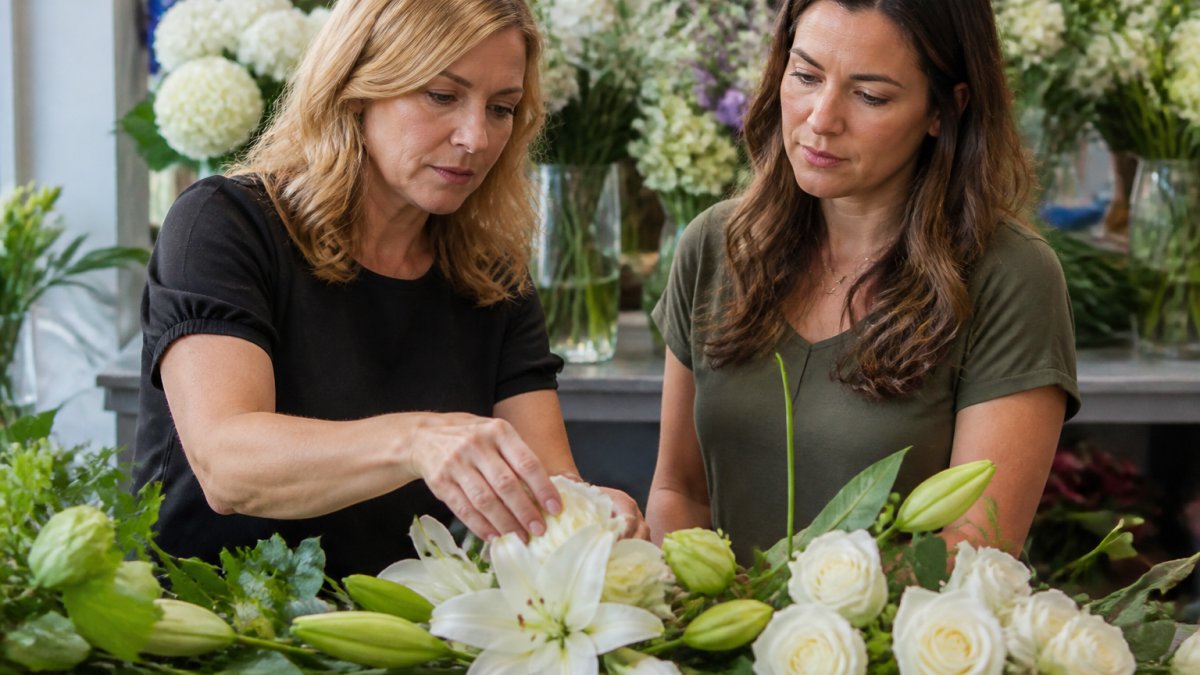
Roses work beautifully too. White and cream roses express reverence and sympathy. Red roses can honor a deep love.
Carnations are often overlooked but practical and meaningful. They outlast many flowers, which matters for funeral-home delivery. Pink carnations symbolize gratitude; white ones represent admiration and pure love.
Orchids, Chrysanthemums, and Gerbera Daisies: Alternative Options
Orchids bring sophistication to a tribute. Long-lasting and available in whites, purples, and pinks, they suit someone who appreciated beauty and elegance.
Chrysanthemums are underrated: sturdy, affordable, and symbolizing truth and devoted love in many cultures. They hold up during transport and last for weeks.
Gerbera daisies add warmth and light without feeling frivolous. They come in soft pinks, creams, and whites.
Assessing Freshness Before You Buy
Freshness is the most important quality factor in a sympathy arrangement, yet most buying guides skip it. Here's how to verify freshness before you pay, what to ask a florist, and the red flags to watch for.
Why Freshness Matters More for Sympathy Flowers
Sympathy flowers must hold up through a visitation, a funeral service, and days of grieving at home. A tired arrangement that droops by day two undercuts the message of support. Freshness is part of the gesture, not a cosmetic detail.
The Visual and Physical Inspection Checklist
Use your senses and a few simple tests when you choose fresh sympathy flowers in a shop or receiving a delivery:
- Petals: Press a petal between thumb and forefinger; it should feel cool, supple, and slightly moist, not papery, dry, or mushy. Brown edges or dark veins indicate age or bruising.
- Stems: Firm and green, not brown, black, or slimy at the base. Bend one gently; it should spring back, not collapse or crack.
- Leaves: Vibrant green and turgid. Yellowing, curling, or brown spots signal ethylene damage or bacteria.
Questions to Ask Your Florist
A reputable florist will welcome these questions. The answers tell you more about quality than any display photo.
- When were these flowers harvested or received? Most cut flowers peak within two to three days of harvest.
- How have they been stored? Flowers should be kept in a cool, humid cooler, not a warm display floor, and conditioned (hydrated and fed) before arrangement.
- What is the expected vase life? A quality sympathy arrangement should last seven to ten days with proper care.
- Can you guarantee freshness on delivery day? Ask what happens if the arrangement arrives wilted or damaged. A florist who stands behind their product will have a clear replacement or refund policy.
Red Flags to Watch For
- Flowers displayed in direct sun or near heat sources.
- Buckets with murky water or debris.
- Stems with rubber bands so tight they crush the stems.
- Arrangements that look heavy on filler and light on focal flowers.
Selecting Colors That Convey Comfort and Remembrance
Color is the first thing people notice about an arrangement, and in a sympathy setting it carries meaning before a word is read. Here are traditional color meanings plus practical considerations most guides ignore: fragrance, allergies, venue rules, and lighting.
Traditional Color Meanings
- White is the most traditional sympathy color, symbolizing peace, purity, and reverence. White lilies, roses, and carnations work for any relationship and setting, and white is safest when you don't know the family's preferences.
- Cream and pale yellow add warmth without brightness, expressing comfort and hope. Pale yellow roses and cream chrysanthemums are common choices.
- Pink shows gratitude and admiration. Light pink suits acquaintances and colleagues; deeper pink conveys appreciation for character and suits close friends or family.
- Red honors deep love, for a spouse, parent, or close family member. Red roses and carnations are traditional, but red feels intense in a large standing spray, use it as an accent.
Avoid bright, cheerful colors like orange, hot pink, or vivid yellow as the dominant palette. They can feel inappropriate for grief. Use them only as small accents if the deceased's personality calls for it, and confirm with the family first.
Practical Considerations Beyond Color
The setting, the recipient, and the venue all affect which palette works.
- Fragrance and allergies: Strongly scented flowers like lilies, hyacinths, and some roses can overwhelm a small hospital room or a fragrance-sensitive home. For hospitals, choose low-fragrance options such as chrysanthemums, carnations, or unscented roses.
- Venue rules: Some funeral homes, places of worship, and hospitals have restrictions on flower types, size, or placement. Lilies are sometimes discouraged in hospitals because of pollen and fragrance. Call the venue before ordering to confirm what is allowed and where arrangements can be placed.
- Lighting: White and cream flowers read as elegant in daylight but can look flat under fluorescent funeral-home lighting, while deep reds and purples can appear almost black. A mix of white, cream, and a soft accent usually reads well anywhere.
- Cultural and religious considerations: Color meanings vary. In some traditions, white is the primary mourning color; in others, red or purple carries specific significance. If you are unsure, ask the family or the funeral director for guidance rather than guessing.
A Simple Color Selection Framework
- Start with a neutral base of white or cream.
- Add one accent color that reflects the relationship or the deceased's personality.
- Confirm fragrance and venue restrictions before finalizing.
- Ask the florist how the palette will look in the delivery setting, not just in the shop.
Sympathy Flower Etiquette: Timing, Delivery, and Presentation
When to Send and Where to Deliver
Timing matters. Send flowers before the service if possible. They brighten the funeral home and offer comfort during visitation.
If you're sending after the service, send within a week.
Where to deliver: Ask the family which funeral home is handling arrangements. Call ahead to confirm delivery details.
For home delivery, send flowers during business hours so someone is there to receive them.
Choosing an Arrangement Type
Standing sprays are formal and prominent. They're placed beside the casket. These work well for immediate family.
Wreaths are circular and complete. They're placed on easels near the service area.
Casket sprays drape over the casket itself.
Bouquets are personal and flexible.
Potted plants like peace lilies last longer than cut flowers. They're a living tribute that grows in the home.
What to Write on a Sympathy Flower Card
Your message should be brief, genuine, and respectful.
Keep it short. Two or three sentences is ideal. Long messages feel like you're trying too hard to fix the unfixable.
Use these patterns:
- "My deepest sympathies to you and your family during this difficult time."
- "Thinking of you and [deceased's name]. My heart is with you."
- "Please know you're in my thoughts. I'm here if you need anything."
- "I have such fond memories of [deceased's name]. You're in my prayers."
Avoid:
- Clichés like "They're in a better place"
- Comparisons to your own losses
- Anything that sounds forced or impersonal
If you knew the deceased, mention something specific: "I'll always remember [person's] kindness and humor. You're in my thoughts."
How Long Do Cut Flowers Last and How to Extend Their Life
Cut flowers from a quality florist typically last 7-10 days.
Care Tips for the Recipient
The family receiving your flowers should:
- Change the water every 2-3 days. Fresh water prevents bacterial growth.
- Trim stems at an angle with a sharp knife. Cut about an inch from the bottom. This increases water absorption.
- Remove lower leaves that would sit in water. Submerged leaves rot and contaminate the water.
- Keep flowers cool. Place them away from direct sunlight, heating vents, and ripening fruit. Cool temperatures slow the aging process.
Matching Flowers to the Deceased's Personality and Preferences
The most meaningful arrangements reflect the person being honored.
Did they love gardening? Choose garden-style arrangements with varied textures and natural shapes.
Were they bold and vibrant? Deeper colors and dramatic blooms suit them better than pastels.
Did they appreciate simplicity?
Was humor important to them? Gerbera daisies in soft colors bring lightness without disrespect.
Did they have a favorite flower or color? Use it if possible.
Ask the family if they know what the deceased loved.
Choosing fresh sympathy flowers is an act of care. East End Flowers & Gifts specializes in custom floral arrangements that capture exactly what you want to express.
Frequently Asked Questions
How can I tell whether sympathy flowers are fresh when ordering online?
When ordering fresh sympathy flowers online, ask your florist when arrangements are prepared, ideally within 24 hours of delivery. Request photos of the actual arrangement before it ships. Check for firm, vibrant petals with no browning or wilting, green stems without slime or discoloration, and tightly closed buds if applicable. A reputable florist can provide same-day delivery options to ensure quality arrives at funeral homes or the family's home.
What are the best flowers to buy for a funeral?
Lilies, roses, carnations, chrysanthemums, and orchids are traditional choices for funeral arrangements. White and pale pink flowers convey peace and sympathy, while red roses express deep respect. Lilies symbolize renewal and the restored soul, making them especially meaningful. Consider the deceased's favorite colors or flowers if known. East End Flowers & Gifts can help you select arrangements that reflect the person's personality and your relationship with the bereaved family.
What is the proper sympathy flower etiquette for timing and delivery?
Send sympathy flowers within two to three days of learning about the death, ideally before or on the day of the funeral service. Deliver arrangements to the funeral home during business hours, or send them to the family's home after the service concludes. Include a condolence card with a brief, heartfelt message. Avoid overly cheerful colors or fragrant flowers if the family has sensitivities. Same-day delivery services ensure timely arrival when you're working with a short window.
How long do cut flowers last after delivery?
Most fresh cut flowers last 7 to 14 days with proper care. Advise the recipient to trim stems at a 45-degree angle, change water every two to three days, remove lower leaves, and keep arrangements away from direct sunlight and ripening fruit. Cool rooms extend longevity.